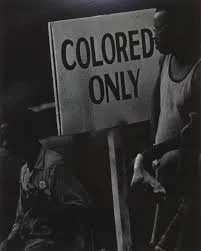
How to Prove Discrimination in Court
First and foremost, “discrimination” is not the legal term that is used in these matters. The proper term is “disperate treatment”. Now, the Supreme Court of the United States has recognized the difficulty in proving discrimination; thus, they implemented the McDonnell Douglas test, which reads as follows:
“In order to make out a disparate treatment claim, a plaintiff must prove that he or she was intentionally treated less favorably because of race, color, religion, sex or national origin. See U.S. Postal Service Bd. of Governors v. Aikens, 460 U.S. 711, 715, 103 S. Ct. 1478, 75 L. Ed. 2d 403 (1983). . . the court should employ the three-step burden-shifting analysis established by the Supreme Court in McDonnell Douglas v. Green, 411 U.S. 792, 802, 93 S. Ct. 1817, 36 L. Ed. 2d 668 (1973). Although the court employs this *1031 burden-shifting analysis, the burden of persuasion always remains with the plaintiff. Jauregui v. City of Glendale, 852 F.2d 1128, 1134 (9th Cir.1988). Therefore, to make out a claim of racial discrimination. . . plaintiff must first prove a prima facie case of race discrimination.
To establish a prima facie case of disparate treatment, the plaintiff must offer evidence that "give[s] rise to an inference of unlawful discrimination." Texas Dept. of Community Affairs v. Burdine, 450 U.S. 248, 253, 101 S. Ct. 1089, 67 L. Ed. 2d 207 (1981). Proof of discriminatory intent may be direct, circumstantial or inferred from statistical evidence, and all evidence that the plaintiff presents can contribute to the inference in a cumulative manner. See Stender v. Lucky Stores, 803 F. Supp. 259, 319 (N.D.Cal.1992). Direct evidence of discriminatory intent is, by itself, sufficient to establish a prima facie case of impermissible discrimination. See Palmer v. United States, 794 F.2d 534, 537 n.1 (9th Cir.1986).
Once the plaintiff meets this burden, the burden of production shifts to the defendant to offer evidence of a legitimate, nondiscriminatory reason for its actions. Washington v. Garrett, 10 F.3d 1421, 1433 (9th Cir.1993). Plaintiff must then produce evidence which raises a genuine factual issue as to whether defendant's reasons are merely a pretext for racial discrimination. Id. If plaintiff's evidence is lacking, summary judgment is proper for defendant.” Wallis v. J.R. Simplot Co., 26 F.3d 885, 890-91 (9th Cir. 1994).
Every court in the United States must use this test to prove or disprove discrimination, so if you have evidence of discrimination, the DEFENDANT must present EVIDENCE, not simply a response, of how his or her actions where non-discriminatory.
If a court does not implement its test, after full knowledge, they can be appealed and possibly sued under 42 U.S.C. § 1983.
I hope this helps you in your journey for justice.
Stay tuned for how to be an active citizen.